
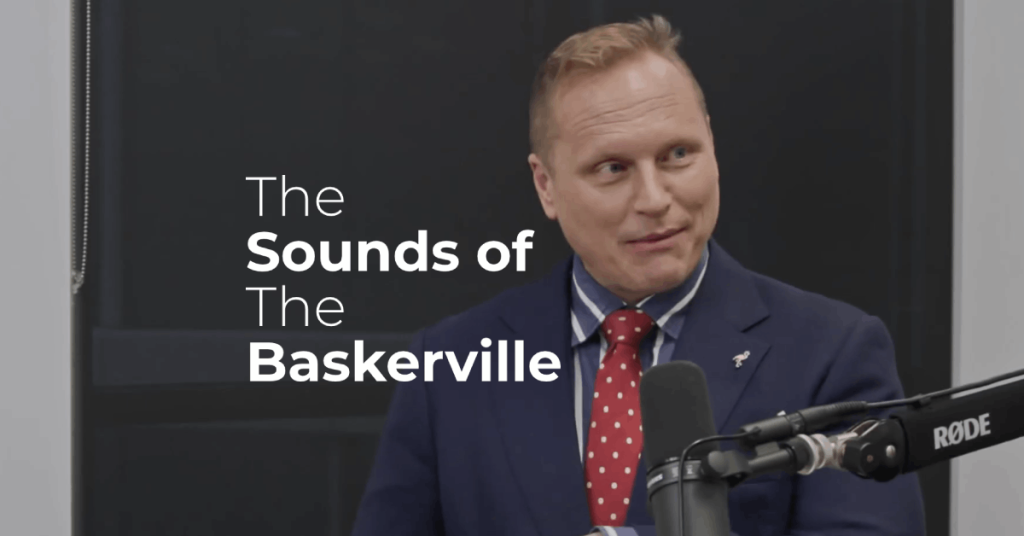
When the corporate regulator reviews 5,020 companies across four financial years, the voluntary administration lessons that come out of it carry a great deal more weight than opinion. That is precisely what ASIC has done in Report 836, its largest ever review of the voluntary administration and deed of company arrangement (DOCA) process, covering appointments between 1 July 2021 and 30 June 2025.
Episode 126 of the podcast works through seven voluntary administration lessons drawn from that data, and what they mean for directors, accountants and advisers who are watching a client edge closer to trouble.
“Directors rarely come unstuck because they picked the wrong process. They come unstuck because they waited until every option but one had quietly closed,”. “Report 836 puts numbers behind something we see every week: the businesses that recover are the ones that ask for help while there is still something left to work with.” The Sounds of The Baskerville.” – Episode 127
What ASIC Report 836 Actually Measured
Report 836 is not a small sample. It examined 5,020 companies over four financial years, making it the deepest look yet at how voluntary administration performs in practice rather than in theory.
The headline finding is reassuring, and it frames every one of the voluntary administration lessons that follow. Voluntary administration remains an effective restructuring tool in this country, and it is worth remembering it is a homegrown one. The process came out of the Harmer Report in the early 1990s, which took company insolvency out of a slow, court-driven, state-based system and handed the decision to creditors instead. Three decades on, the data suggests that call was the right one.
The 7 Voluntary Administration Lessons From Report 836
1. Larger Businesses Restructured More Successfully
Size mattered. Of the businesses reviewed with liabilities above $10 million, 48.3% entered a DOCA. For those with liabilities under $250,000, the figure was 15.4%.
The reason is not sophistication so much as access. Larger companies tend to have capital behind them, more advisers around the board table and a stronger emphasis on governance, all of which widen the options available. They often hold assets that can be leveraged even when those assets cannot be turned into cash quickly.
That said, 15.4% is not nothing. Voluntary administration remains a genuine option for smaller companies, and there are sound reasons why a business owing $250,000 might choose it over small business restructuring.
2. The Restructuring Landscape Has Shifted
Before COVID, voluntary administration accounted for somewhere between a third and 40% of all external administrations. It now sits at roughly 10%.
Nothing has gone wrong here. Small business restructuring arrived and gave directors of companies with debts under $1 million their own express lane, so voluntary administration is now used for larger and more complex matters, which is where it does its best work.
The wider context matters. Corporate insolvency activity has been running above GFC levels, with appointments in the range of 12,000 to 15,000 a year against a pre-COVID average closer to 8,000 or 9,000. There is always a lag: the GFC hit in 2008 and insolvencies peaked around 2012, while COVID hit in 2020 and the real impact has only been felt from 2024 onwards, which is where we still sit.
3. Nearly Half Of Voluntary Administrations Reached A DOCA
Some 44% of voluntary administrations resulted in a deed of company arrangement, one of the more encouraging voluntary administration lessons in the report. It is a strong result, because a DOCA usually means one of two things: the business keeps trading, or it is sold as a going concern to someone with better capital or better operational discipline behind them.
In other cases, a DOCA is simply a compromise with creditors that could not have been achieved any other way. It is also fair to say not every appointment is made with a DOCA in mind. Sometimes a director appoints an administrator to get on the front foot before a creditor makes the decision for them, and that is a legitimate use of the process.
4. Success Does Not Have One Definition
This is one of the more useful voluntary administration lessons for anyone weighing up their options. Successful outcomes came in different shapes: 49% involved a business that continued trading, and 22% involved a business or asset sale.
Debt compromise is a common feature of many DOCAs. In practice, a DOCA is often used to clean up a balance sheet, decide which assets are worth keeping and package the good parts of the business for a buyer.
5. Well-Structured Proposals Build Creditor Confidence
This is where the voluntary administration lessons get practical. Nearly two-thirds of DOCAs, 63%, relied on third party funding, which matters because the first question creditors ask is why the company is not simply paying what it owes. When the money comes from outside the company, the answer is straightforward: this contribution disappears in a liquidation. It is a white knight solution to a problem creditors already understand.
Structure counts too. In 83% of cases, related party claims were excluded from voting. Unlike small business restructuring, related parties can vote in a voluntary administration, and the accepted position is that they should support the deed without drawing from the fund it creates.
The flexibility of a DOCA is a real advantage. Small business restructuring is rigid by design, which is a feature rather than a criticism. A deed can be tailored, and it can even give creditors power to vary what they originally approved.
6. When DOCAs Succeed, Creditors Benefit
Of the DOCAs reviewed, 81% were fully effectuated. Only one in five fell over, usually because a condition precedent was not met, such as a licence that did not transfer or a share transaction that did not receive court ratification.
Almost 90% paid unsecured creditors a dividend, averaging 21 cents in the dollar. Compare that with liquidation, where the vast majority of unsecured creditors receive nothing at all. Of all the voluntary administration lessons here, this is the one worth putting in front of a sceptical creditor.
7. The Biggest Lesson Is Do Not Wait
Every one of these voluntary administration lessons points back here. Early advice preserves options, and it preserves something less tangible but just as valuable: creditor goodwill.
Creditors who have been kept informed will usually hear a proposal out. Creditors who have been ignored for eighteen months will not, and asking people who have lost patience with you to accept less than they are owed is a hard conversation to win.

Why These Voluntary Administration Lessons Matter Now
With appointments still elevated and cost pressures showing little sign of easing, these voluntary administration lessons are practical rather than academic. If a business you run or advise is under pressure, seeking advice early does preserve options and improve outcomes.
Listen to JIRSCH in Episode 127 for the full discussion, and get in touch with an insolvency and restructuring specialist while the choices are still yours to make.
For those seeking further guidance on restructuring and recovery, resources such as Insolve provide valuable insights into applying business turnaround techniques within Australia’s legal and commercial framework. With the right approach, even severe financial challenges can become a turning point rather than an endpoint.
Podcasts version are available here: SEASON 6


